- Accessory market
- Guangzhou
Huadu Shiling International Leather City
China's officially recognised "Leather Capital": 460,000m² and more than 4,000 shops in Shiling Town, exporting leather and leather goods to 142 countries.
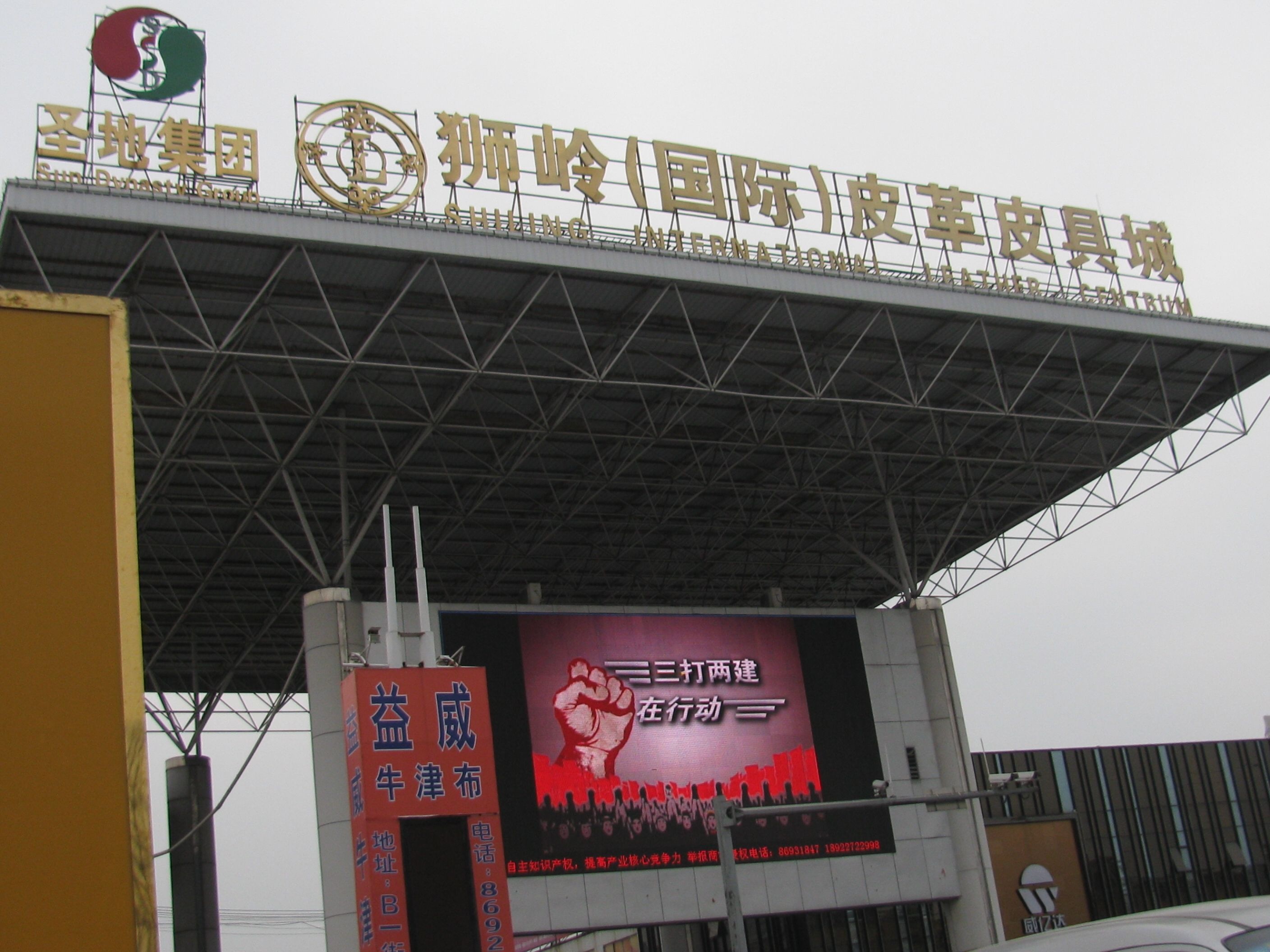
Shiling is a town of leather. The industry traces back to 1978 in Yishan Village, and the town now holds more than 18,000 registered business entities working in leather and leather goods. In 2000 the trade was consolidated into a single purpose-built complex — Shiling International Leather and Leather Goods City — and the town was subsequently recognised as China's "Leather Capital".
The numbers are on a different scale from a typical market. The site covers over 700 mu with 460,000m² of floor area and more than 4,000 shops. Daily transaction volume is put above ¥30m, around half a million buyers visit annually, and goods from the town reach 142 countries.
What the market sells
Shiling divides cleanly between materials and finished goods, and most serious buyers come for one or the other rather than both.
On the materials side it is one of the largest concentrations of PU and synthetic leather anywhere, alongside genuine leather in a full range of finishes, backing fabrics, leather chemicals and hardware. Buyers developing a bag or a shoe upper can specify from an enormous stock range, often with tighter pricing than Sanyuanli because the manufacturing is local.
On the finished side the town produces bags, cases, luggage, wallets and belts at volume, much of it OEM work for overseas brands. Because the factories and the material suppliers are in the same town, Shiling is particularly strong for buyers who want a manufacturing relationship rather than a trading one.
Prices, minimums and how buying works
Material buying is by the roll or by the hide, and prices move sharply with specification — thickness, backing, finish and abrasion resistance all matter more than the headline "PU leather" description. Stock articles carry no meaningful minimum beyond the roll; custom colours and embossed finishes generally start at a few hundred metres.
Finished-goods manufacturing at Shiling typically starts around 300 to 1,000 pieces per style, higher than Sanyuanli because the factories here are set up for longer runs. In exchange, unit costs at volume are usually better and quality control is more systematic.
Shiling is far enough from central Guangzhou that a visit needs planning. Make appointments, take a translator if you do not read Chinese, and go with a written specification — the town rewards buyers who arrive with a brief and is frustrating for those who arrive to browse.
Planning a visit
Shiling is in Huadu District, in Guangzhou's far north — around 15km from Baiyun International Airport, which makes it a natural first stop on arrival, and roughly an hour from the city centre. Metro Line 9 serves Huadu but not the market directly; most buyers take a car for the last stretch.
Plan a full day. The complex alone covers 460,000m², and any factory visits are separate journeys within the town.
Frequently asked questions
How is Shiling different from Sanyuanli?
Sanyuanli is a trading district close to central Guangzhou with lower minimums; Shiling is a manufacturing town with a purpose-built complex, deeper material stock and higher production minimums. Shiling suits manufacturing relationships, Sanyuanli suits trading and sampling.
What minimum order applies to finished bags?
Typically 300 to 1,000 pieces per style, reflecting how the local factories are set up. Unit costs at those volumes are generally better than Sanyuanli's.
Is it worth the trip from central Guangzhou?
If you are buying materials in volume or looking for a manufacturing partner, yes. If you want to buy a few dozen finished bags, Sanyuanli is closer and better suited.
Location & opening hours
- Address
- رقم 71–74 طريق حي هي، المنطقة الصناعية لينغنان، بلدة شيلينغ، حي هوادو، قوانغتشو
- Opening hours
- يوميًا؛ تفتح معظم المتاجر منتصف الصباح تقريبًا