- Clothing market
- Dongguan
Humen Clothing Wholesale Market
Fumin Fashion City and the markets around it: 1,500 shops on Yinlong Road, backed by more than a thousand garment factories in the same town.
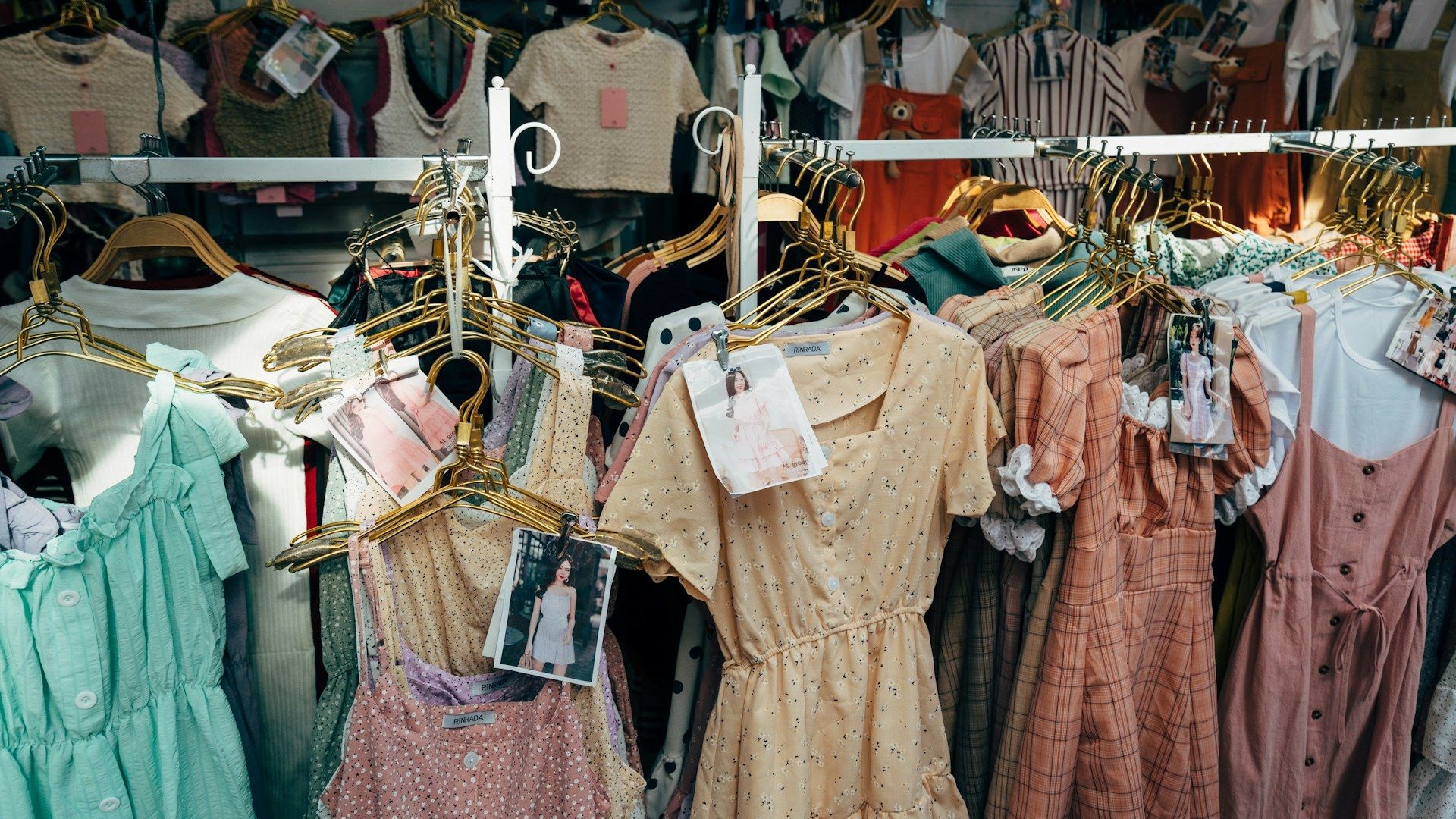
Humen's claim on the garment trade is manufacturing. The town took in its first imported-materials processing work in 1978; by the late 1980s more than 600 garment businesses were operating there, and today the figure is above a thousand, including more than 300 foreign-invested factories. The wholesale markets grew as the shop window for that industry rather than as an independent trading centre.
That matters for how you buy here. In Guangzhou, the market and the factory are usually separate businesses in separate districts. In Humen, the person selling you a garment frequently has a direct line to the line that made it.
What the market sells
Yinlong Road and Humen Avenue carry the cluster. Fumin Fashion City, open since 1993, is the anchor; Huanghe Fashion City sets the town's upper tier; Daying Oriental carries the broadest general range; Broadway moves the most volume. Around them sit the rest — by 2012 the town counted 18 specialised garment markets and roughly 8,600 shops. Each of the four is profiled separately.
The product mix is weighted toward women's apparel at mid-range and mass-market price points, with a substantial children's wear trade alongside it. Humen goods reach Japan, South Korea and Southeast Asia in volume and travel as far as Europe and the United States.
Because the factories are local, Humen is a better market than most for OEM and private-label conversations. A buyer who arrives with a tech pack rather than a shopping list will find people here able to quote against it.
Prices, minimums and how buying works
Stock buying in Humen works like anywhere else in the delta: per-piece pricing with a low minimum, a real break at volume. Prices sit close to Guangzhou's, and for pure stock buying Guangzhou's larger markets usually offer more choice.
The reason to come to Humen is production. Minimum order quantities for a dedicated run typically start in the several-hundred-pieces-per-style range, and the factories are used to working from a tech pack, a size chart and a fabric specification. Sampling turnaround is fast because the fabric market is five minutes away.
If you are exploring private label, come with three things: a reference garment, a clear target landed cost, and honest annual volumes. All three change which factories will take the meeting, and being vague about any of them wastes a day.
Planning a visit
Humen is roughly an hour from Guangzhou and 45 minutes from Shenzhen, served by Humen railway station on the Guangzhou–Shenzhen intercity line and by the Dongguan metro. Market hours run about 08:30 to 18:00 — earlier than Guangzhou, matching the factory day.
A sensible day here pairs the clothing market on Yinlong Road with the fabric cluster on Renmin North Road and one or two factory appointments. Book the factory visits before you travel; walking in unannounced rarely gets past reception.
Frequently asked questions
Is Humen better than Guangzhou for clothing?
For buying finished stock, Guangzhou offers far more choice. For production — private label, OEM, made-to-spec runs — Humen is usually the better base, because the factories are in the same town.
What is a typical minimum for a production run?
Several hundred pieces per style is a normal starting point, with the exact figure depending on fabric, construction and colour count.
What is Fumin Fashion City?
The anchor market of the Humen cluster — opened 1993, 40,000m², more than 1,500 shops, and around ¥6bn in annual sales.
Location & opening hours
- Address
- Yinlong Road، بلدة هومن، دونغقوان
- Opening hours
- يوميًا، من نحو 08:30 إلى 18:00