- Accessory market
- Dongguan
Humen Garment Accessory Markets
The trims half of Humen's fabric district: zips, buttons, webbing, lace, hangtags and sequins across several adjacent markets serving around 20,000 trade buyers a day.
Humen's accessory trade exists because Humen's factories need it within arm's reach. The town has close to a hundred accessory producers of its own — zip and button makers in particular — and the markets that sell their output sit directly alongside the fabric halls rather than in a separate district.
The result is a single business circle of adjacent markets covering roughly a square kilometre: the Fumin complex and its Taixing accessories city, the third floor of the International Fabric Trading Centre, the Bomei fabric and accessory trade centre, and the Fumin leather and leather-goods market, among others. Somewhere close to 20,000 trade buyers pass through it on a normal working day.
What the market sells
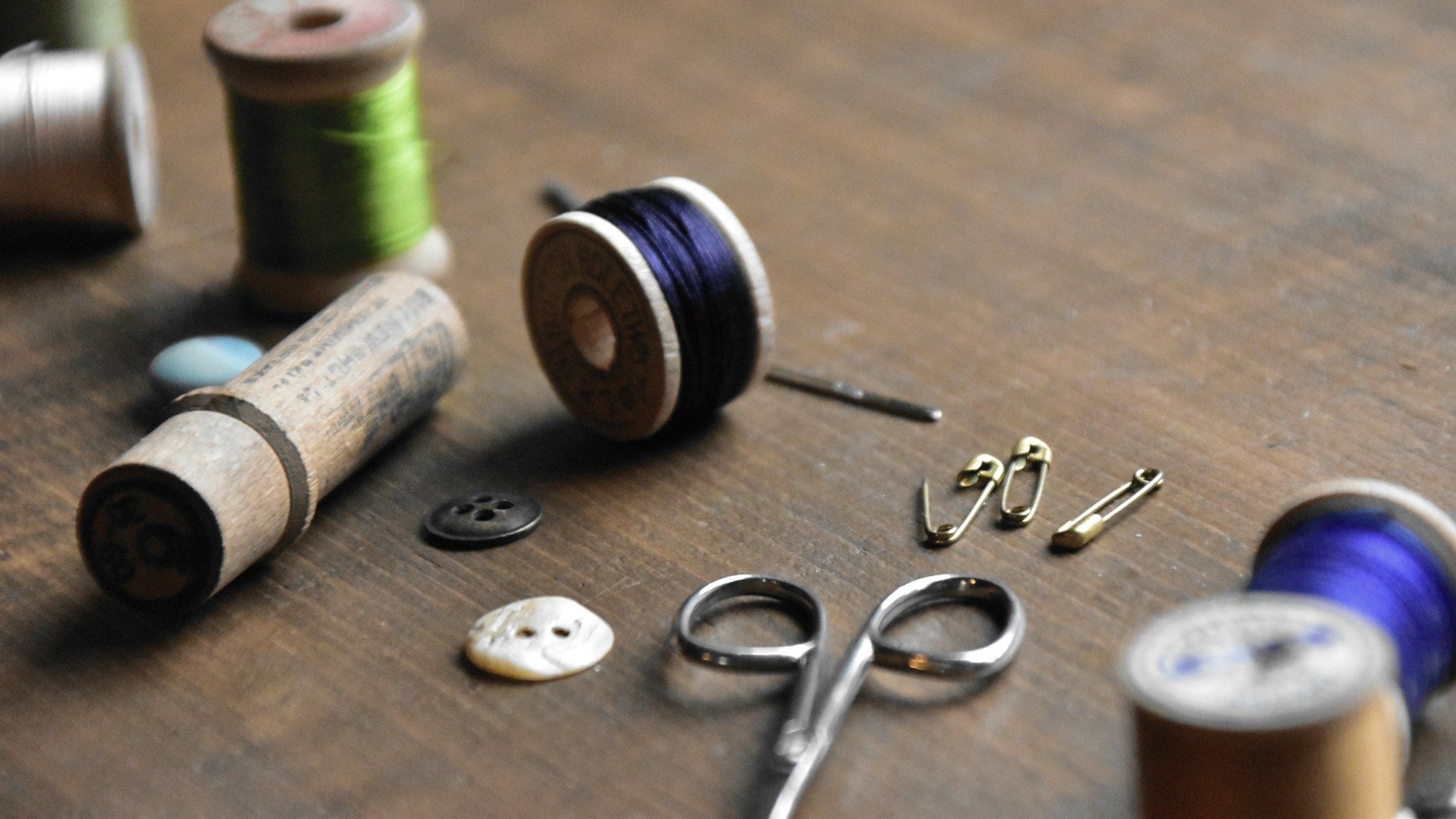
Everything a garment needs that is not the shell fabric. Zips in every length, colour and tooth type; buttons in resin, metal, shell and wood; hooks, eyes, snaps, eyelets and buckles; webbing, tape, elastic, cord and drawcords; lace, piping and bias binding; decorative metal cord and premium sequins.
The labelling and packaging trade runs alongside it — woven and printed labels, care labels, hangtags, swing tickets, polybags and cartons. For a small brand this is often the most useful part of the district, because good labelling in small quantities is genuinely hard to source elsewhere.
What distinguishes Humen from Guangzhou's station-area trims market is proximity to production. The people staffing these counters supply the factories five minutes away, so they answer questions in production terms — what holds up through a wash test, what a particular zip costs at ten thousand units — rather than in retail ones.
Prices, minimums and how buying works
Trims sell by the gross, the bag, the roll or the thousand depending on the item, and stock minimums are low enough to suit sampling. Custom items — branded buttons, woven labels to your own artwork, printed tape — start higher, typically in the low thousands, with lead times of one to three weeks.
Bring the fabric swatch. Trim vendors match by hand and eye, and will produce a dozen near-matches within minutes of seeing the cloth; describing a shade across a counter does not work in any language. This is the single reason to buy fabric before trims rather than the other way round.
Humen's advantage over sourcing trims in Guangzhou is stock depth and reorder speed on the items local factories consume constantly. If your production is in Humen, buying the trims here removes several days of transit from every repeat order.
Planning a visit
The accessory markets share the fabric district around the Guantai Road and Bomei Road junction, a short drive from Humen railway station. Hours run roughly 08:30 to 18:00, on the factory day.
Treat it as a walk between buildings rather than a single stop, and do it in the same visit as the fabric halls — Fumin and the International Fabric Trading Centre are both within the circle, and matching trims to cloth is far easier with both in hand.
Frequently asked questions
Which building should I go to?
They function as one circle. The Taixing accessories city and the third floor of the International Fabric Trading Centre are the two densest concentrations of trims; the Bomei trade centre and the Fumin complex carry them alongside fabric.
Can I get custom woven labels and branded buttons made?
Yes. Expect minimums in the low thousands and a lead time of one to three weeks for custom artwork or tooling.
Humen or Guangzhou for trims?
Guangzhou's station district has more variety. Humen has deeper stock on what local factories use and far faster reorders — so buy where your production is.
Location & opening hours
- Address
- منطقة طريق قوانتاي / طريق بومي، بلدة هومن، دونغقوان
- Opening hours
- يوميًا، من نحو 08:30 حتى 18:00